
A caption that one of my LinkedIn contacts posted started out with “Political views aside…” and then continued on with a clearly divisive subject. This is an automatic red flag to me 🚩🚩🚩 Our perspectives are all intrinsically biased as humans and any attempts to reframe one’s particular opinion as neutral or unbiased is absurd. I make it no mystery that my world view is largely guided by the non-aggression principle.
Author: Drew
A picture is worth a thousand words
I’ve had a webcam continuously mounted to the roof of my family’s cottage on Lake Sunapee since 2014, mainly with the purpose of spying on the weather when away from the lake. Our view of Sunapee Harbor is one of the best views on the lake. Unfortunately, from the angle of the webcam, you can’t see Mt Sunapee, which is located directly behind the tall tree on the right.
I wrote a program for a Raspberry Pi micro computer that sits inside the cottage which uploads photos from the camera to a website, which also gets forwarded to other weather websites such as Windy and, formerly, Weather Underground. Windy even generates 24-hour time-lapses.
Additionally, within the last couple years, I wrote another program that tweets the sunset and sunrise webcam photos on the @SunapeeWX Twitter feed. Slowly, I’ve made improvements to the feed, including embedding a temperature forecast API. Soon, I hope to integrate a sunset/sunrise forecast API, SunsetWX, which is also available via the Alpenglow iPhone app.
Keeping a remote webcam online over the years has proved to be a challenge, particularly with intermittent power and internet. This is the second webcam I’ve had on the roof and this spring I’ll probably upgrade and get a newer one. The sensor is starting to fail, thus why it frequently shows blank or pixelated images. The Chinese firmware in this Amcrest camera is also particularly bad. The reviews on newer Reolink cameras look more promising.
I’ve also experimented with personal weather stations on the roof over the years, but those have proven to be finicky as well, so I’ve chosen to focus on the webcam instead. The webcam has been extremely useful for anticipating both aviation and ski conditions. A picture is worth a thousand words!
Merry Christmas from the Free State
Genuinely impressed by John Gisis’s drone photography. He is a retired UPS worker from Rochester, NH.
The Mountain Division
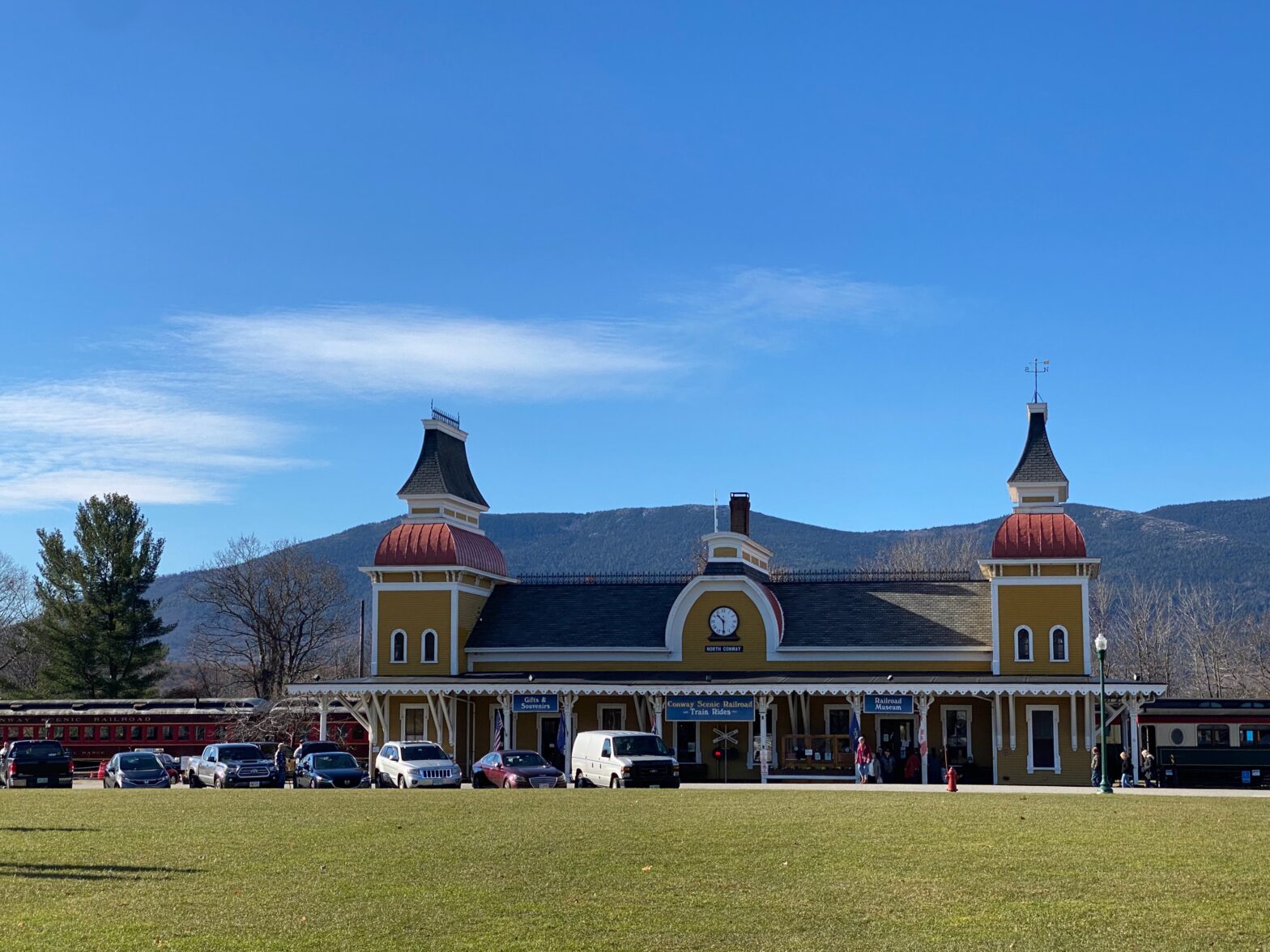
The Maine Central Railroad’s Mountain Division thru Crawford Notch, New Hampshire, is the crown jewel of the historic mainline railroads in New England. The road snakes into the White Mountains to Crawfords Station, about 25 miles north from North Conway. An inactive right-of-way continues another 45 miles from Crawfords to St Johnsbury, VT.
Other than the grand scenery, the significance of this line was that it once served as the primary route for freight traveling from Maine to points west of Chicago via Canada. After the consolidation of the Boston & Maine and Maine Central railroads in the 1980s, the preferred route for freight was the St Lawrence and Atlantic Railroad via Gorham and Berlin, NH, which has more gentle grades.
Nowadays, the glory of the Mountain Division can still be experienced aboard the Conway Scenic Railroad‘s Mountaineer train, which my parents and I had the pleasure of doing the week before Thanksgiving this year, during my interim between jobs. This was the Conway Scenic Mountaineer’s final excursion of the 2021 season and the neat thing about the ride late in the year is the ability to see the snow-capped peaks without foliage blocking the views.
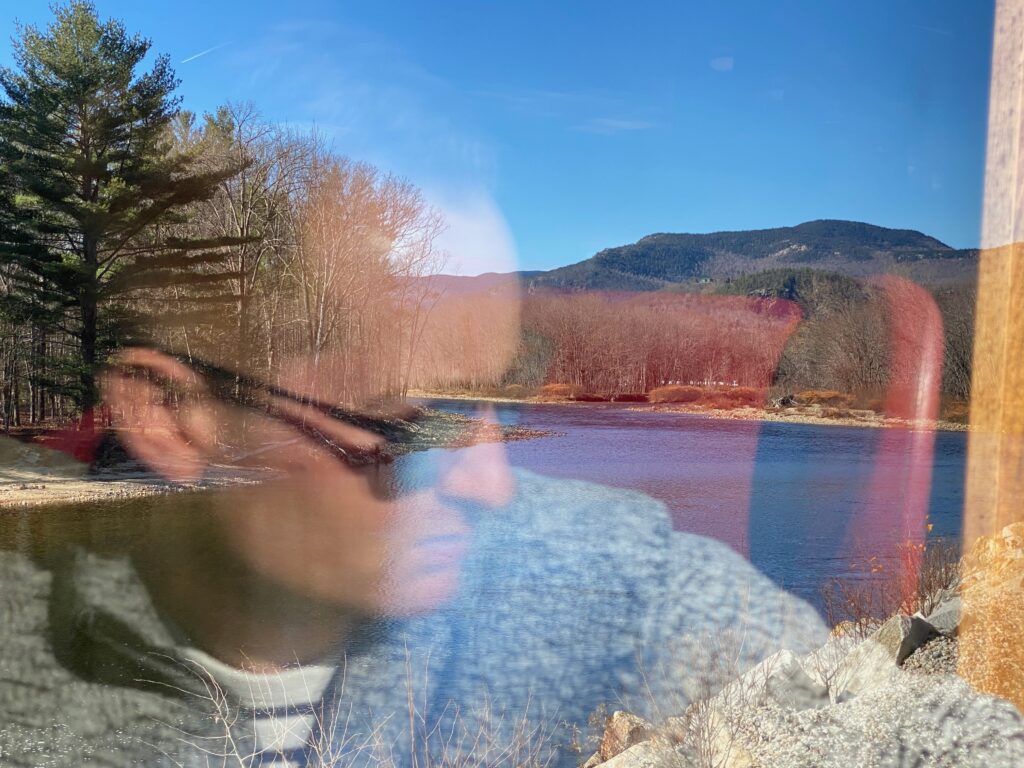
Trip highlights
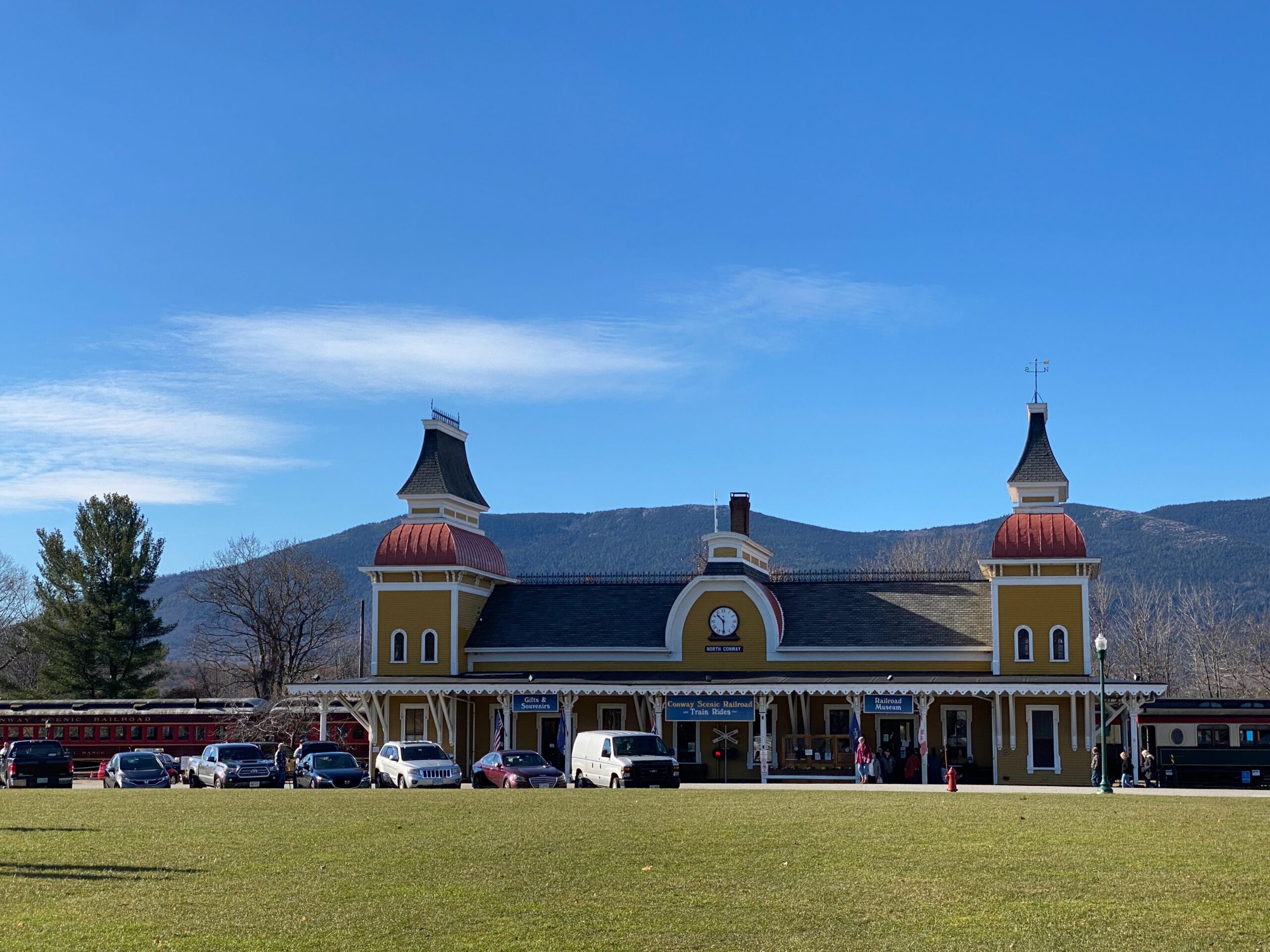
- North Conway Depot – The mountain backdrop with Cathedral Ledge and the atypical architecture for New England make this a photo destination unto itself. This is was designed by Bostonian architect Nathaniel J Bradlee and is considered a unique blend of Victorian and Imperial Russian architecture. Bradlee was an accomplished architect and designed many of the brownstones in Boston’s South End.
- Frankenstein Trestle – It’s a long curved trestle. A lot of bystanders take pictures of the traversing trains and I’ve spotted several great drone shots on Instagram of trains on this trestle. Honestly, it’s not the most scenic part of the ride, but it must have been quite the engineering feat when the railroad was built in the mid-1800s.
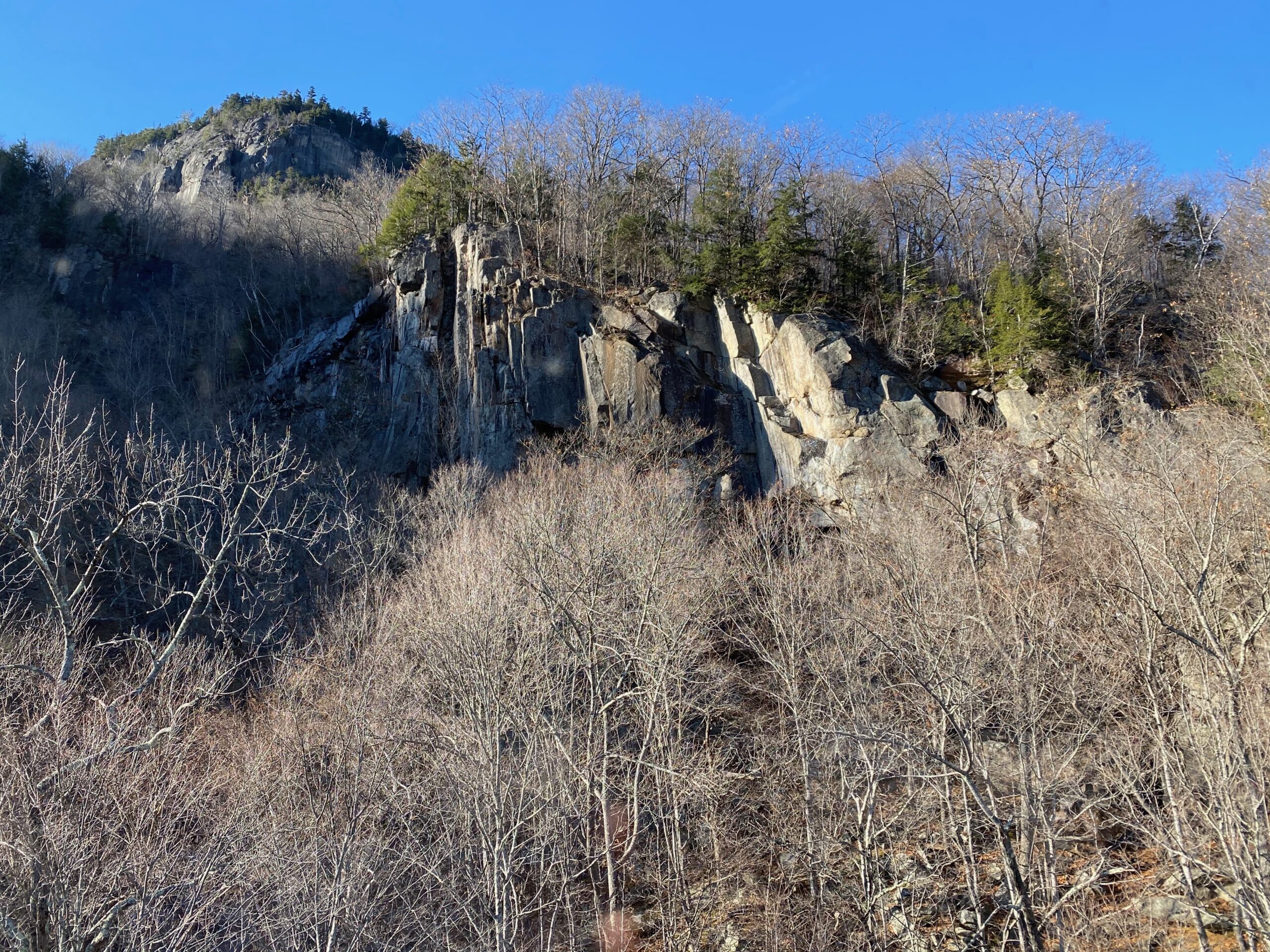
- Mt Washington views from Crawford Notch – Nothing short of amazing. I’ve been on many trains thru the Swiss Alps and the views along here are in the same league.
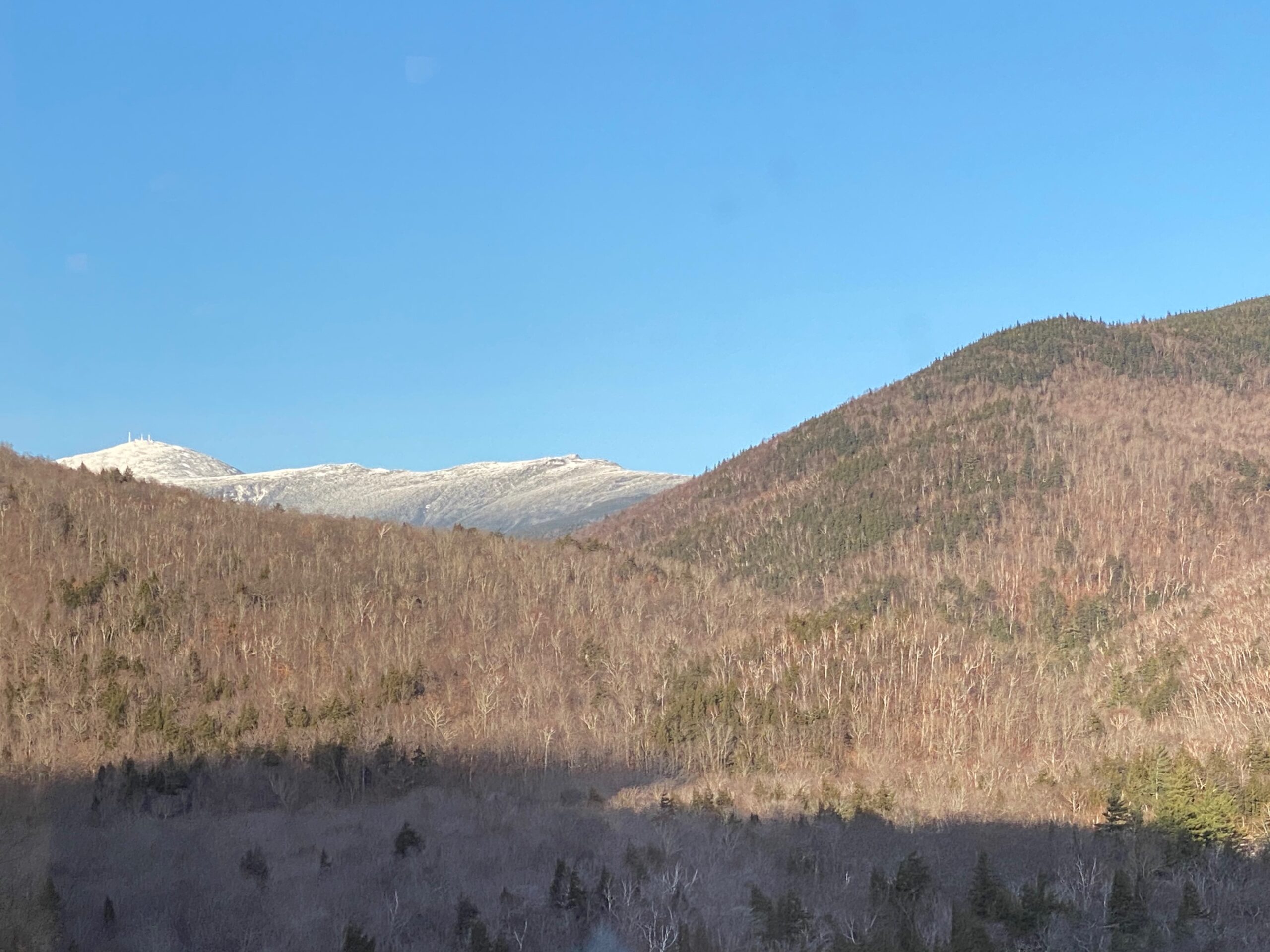
- Crawfords Station – Another fine example of Bradlee’s work, although slightly more standard Victorian. There are many excellent photos ops of the station with Crawford Notch in the background.
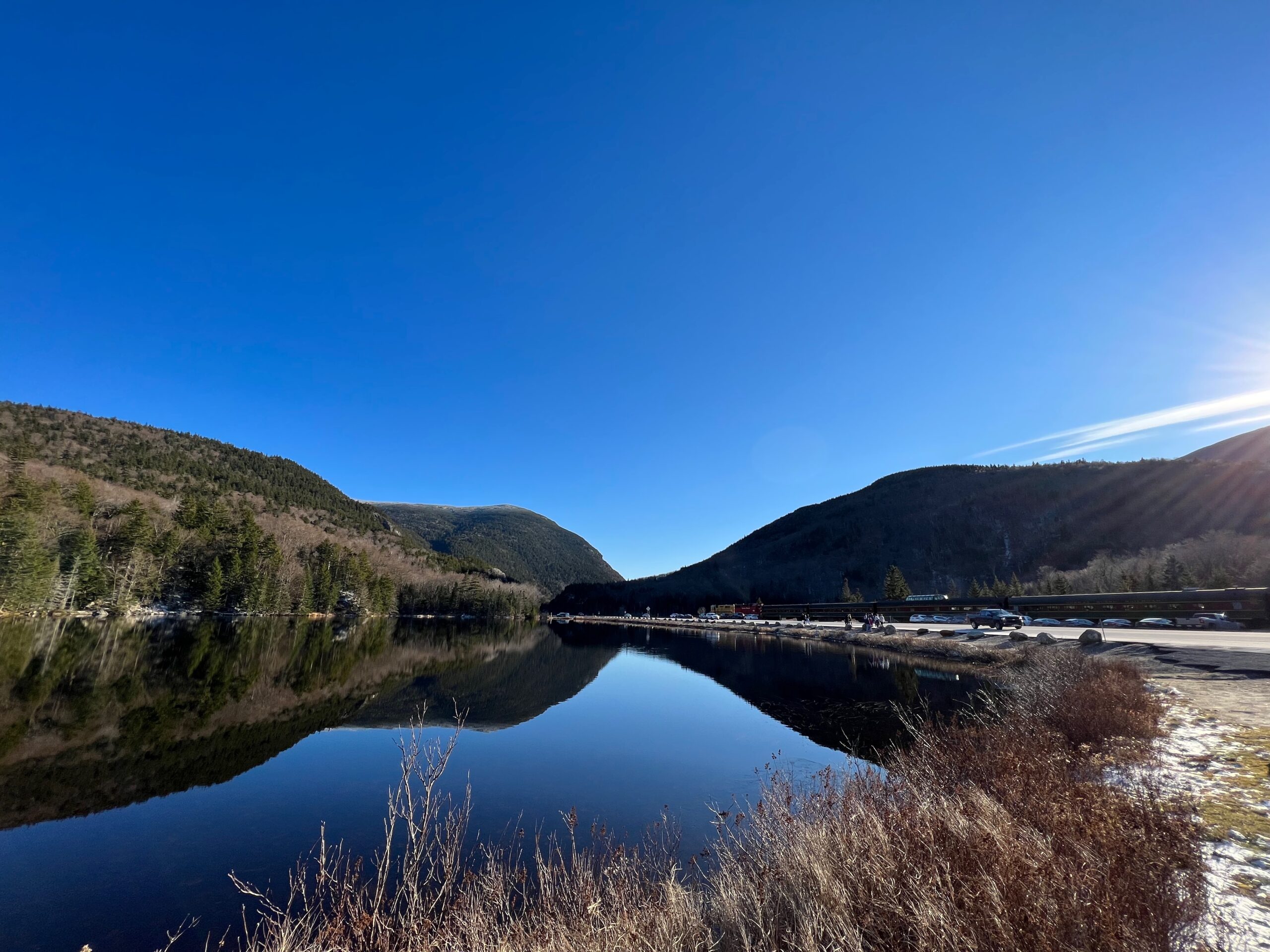
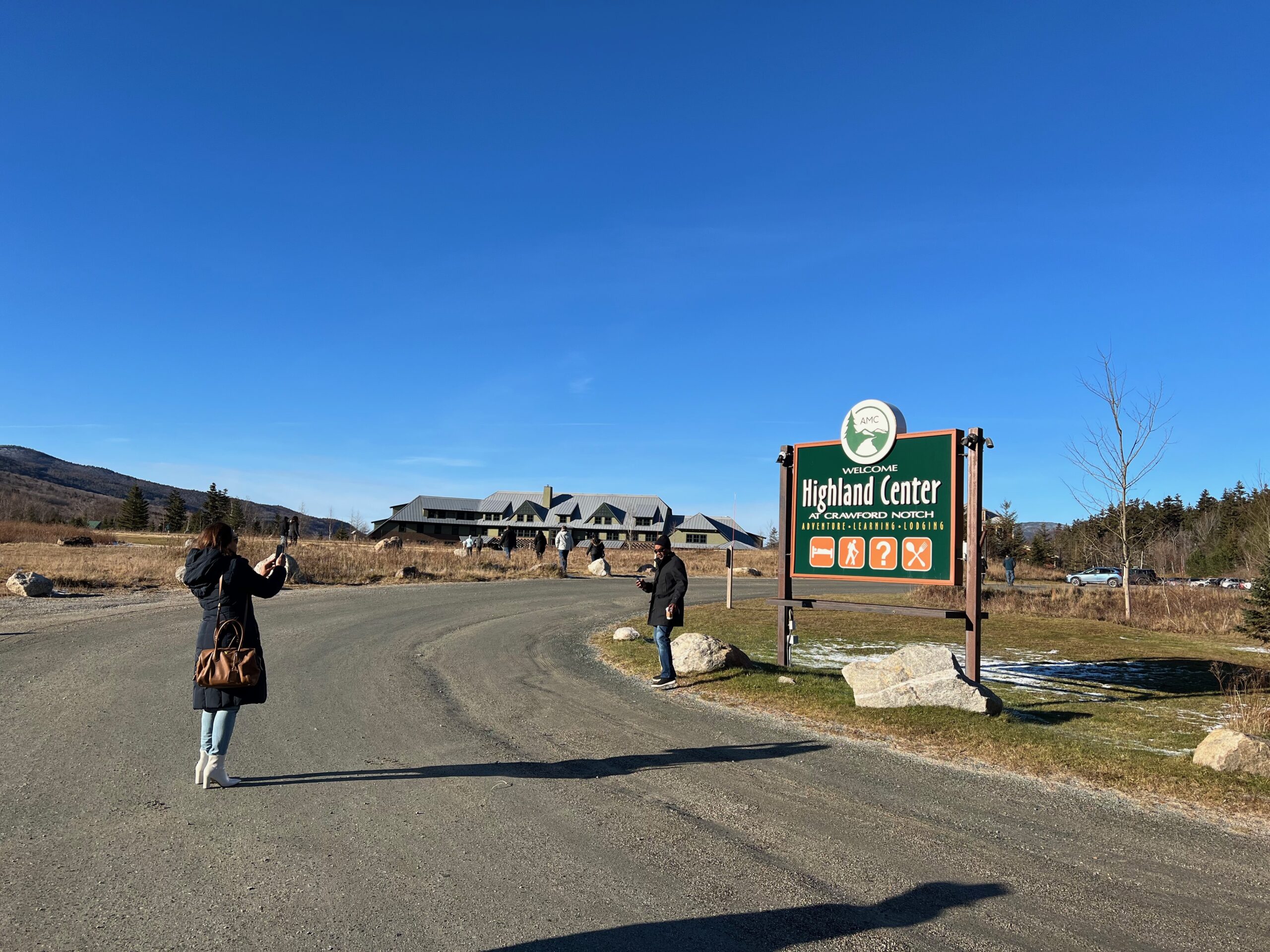
- AMC Highlands Center – Probably Appalachian Mountain Club’s most modern lodging facility. It has a gift shop, restrooms, a cafe, and many scenic vistas. This is walking distance from Crawfords Station.
One of the big themes of the guided narration during the train ride was mortality. Both the aspect of inhabiting an avalanche-prone valley and operating a railroad in the wilderness a century ago were dangerous prospects. The conductor memorialized many lives lost trying to tame the savage elements of the White Mountains. Along the railroad itself, there were numerous accidents, including a particularly bad train boiler explosion. It’s no wonder that the American Indians demurred from inhabiting much of the rugged terrain and were also reluctant to ascend the high peaks.
This was a long ride, sitting at about 5 hours round trip. It’s unfortunate that the tracks in the low country leading up to the notch aren’t in slightly better condition allowing for faster speeds, since the scenery is not quite as interesting as it is along the notch. However, the weather was as good as it possible could have been since Mt Washington’s summit is usually hidden in the clouds the vast majority of the year. Also fortunately, the seats are very comfortable and the large windows offer the audience world-class views. This was a wow.
Off the beaten path
There can be a certain charm in traveling to deteriorating places. You get to play anthropologist and historian trying to imagine what once was. It’s remarkable how relative human development in certain localities, such as the rust belt or Russia, can decline precipitously in a matter of decades.
One of my favorite YouTube travel shows is called “Bald and bankrupt“, which is about a gentleman named Benjamin from England, who is a semi-native Russian speaker and who travels primarily around the former East Bloc. Benjamin travels in pursuit of uncovering relics of the glory days in the former Soviet Union, all while correctly exposing the humanitarian disaster that is communism, be it touring the Gulags or KGB torture facilities.
What I particularly like about this show is that there are no rose-colored glasses and beating around the bush as the audience gets to see a raw and authentic perspective about places that are not well known outside the 2nd world. Benjamin has many man-on-the-street segments where he asks locals unfiltered questions like “What’s your opinion on Gorbachev?”
In my final weeks living in New Jersey, I took some Bald and bankrupt-inspired trips. The first being a drive up to the Poconos and Scranton. I had been up to Scranton once before a couple years ago to see Steamtown, which honestly, aside from a couple famous steam trains, isn’t anything to call home about. Steamtown was a steam train exhibit originally created by F. Nelson Blount in the Lake Sunapee and Monadnock regions of New Hampshire, later moving to Vermont and then finally to Scranton, PA, as part of a pork-barrel spending project later turned National Park. The default train ride that Steamtown offers is pretty lame compared to other heritage railroads, such as those in the Delaware Valley or the White Mountains of New Hampshire.
Right next door to Steamtown is the Electric City Trolley Museum, which I found far more interesting, and the main reason for a return visit to Scranton. They offer trolly/streetcar rides down a 5-mile track. The trollies reach speeds of up to 30 MPH, making this the fastest heritage railroad that I’ve been on. Amazing to think that less than 100 years ago, trollies were the primary form of transportation.
Adjacent to Steamtown is the Steamtown Mall, yet another failed government boondoggle to revitalize Scranton. The mall is full of vacant storefronts, a greasy pizza shop, and multiple discount cellphone carriers. Boost Mobile and Metro PCS tend not to set up shop in the nicest part of town.
I did manage to eat at a decent ramen restaurant in town called the Peculiar Kitchen. If for whatever reason you find yourself in Scranton and hungry for ramen, this is the place to go.
A week later, I continued my bald and bankrupt tour in Atlantic City, New Jersey, which was once the premier summer destination for city dwellers in Philadelphia, including both of my maternal grandparents. Immediately upon parking on a street next to casino, which towered above, I felt a seedy aura.
Again, much like Scranton, Atlantic City has seen better days. There were many abandoned storefronts as I walked along the boardwalk. Electronic billboards lined the boardwalk every 50 yards and flashed obnoxious ads. Perhaps the most striking thing about Atlantic City was the demographic of people in attendance. I felt like I was the only sober, height-weight proportional, Caucasian, young male. I felt very out of place to say the least.
After a stroll around the Bass Pro Shop, I made my departure for Ocean City, which at only 9 miles away from Atlantic City, felt like a world apart.
Drones & fireworks 😍🎆
Atlas always puts on a great show! They do much of the professional firework displays around New England. I was amazed with the drones in the Olympics opening ceremony this summer and I’m happy to hear that the drones are on the horizon for night displays locally.
Summer 2021 Drone shots
More drone clips, set to an uptempo French soundtrack of course. The 4K video might take YouTube a day or two to render.
Drone bill
And so it begins!
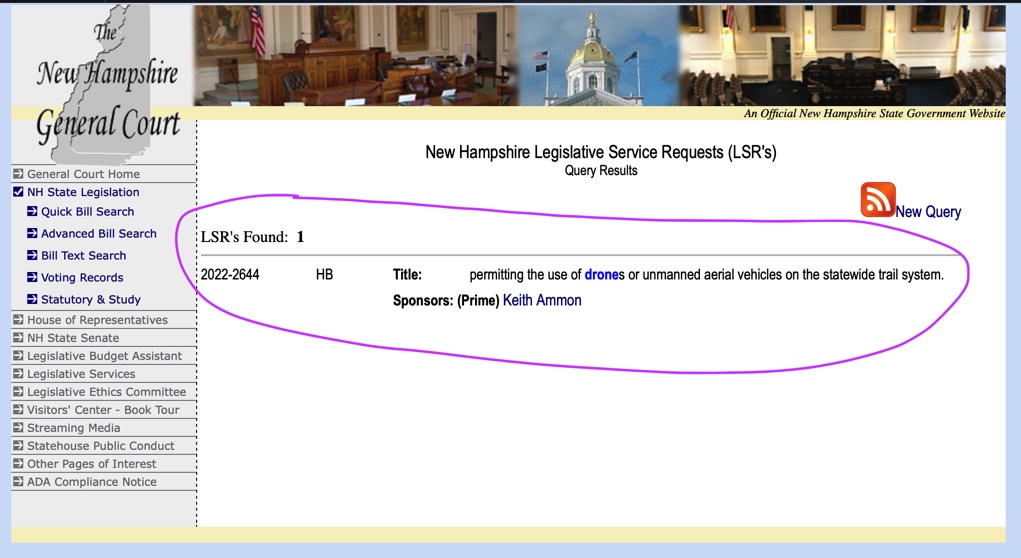
Big thank you to Representative Keith Ammon for submitting this Legislative Service Request (LSR) for me. LSRs get converted into bills by legislative staff. This will be a bill in the 2022 Legislative Session.
Bullet-proof canoe
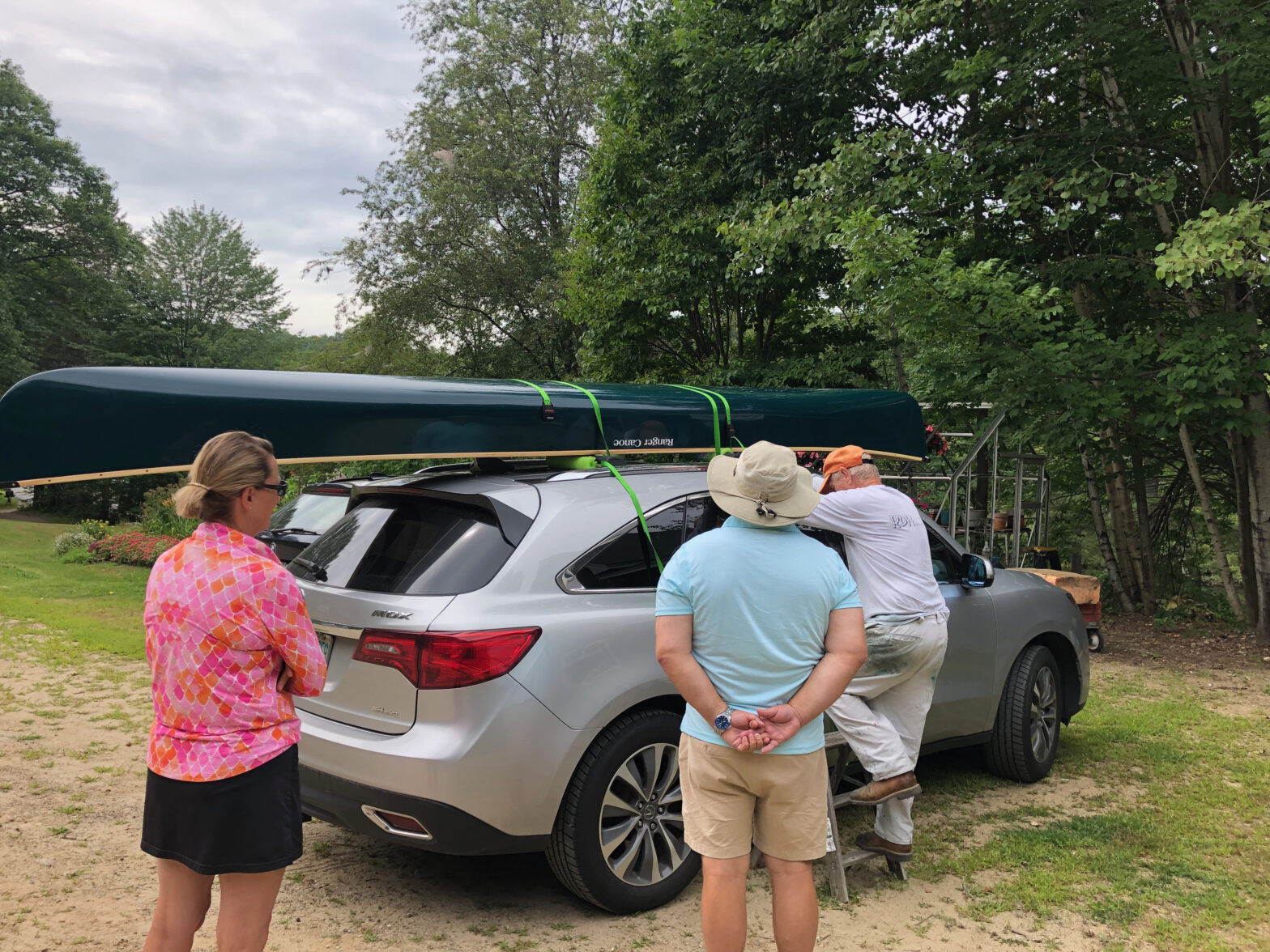
My parents picked up a kevlar Ranger canoe yesterday near Squam Lake. I had never been to the village of Holderness before and was thoroughly impressed by the Squam Lake Marketplace. We got panini sandwiches and lime zest cookies. The store had many high-end local-themed souvenirs, such as: loon floats, artisan cheese, and New Hampshire home decor. This might inspire me to watch “On Golden Pond” (1981), which was filmed on Squam Lake.
The summer is flying by. I have been taking plenty of drone shots, but I haven’t been able to dedicate much time posting the photos and videos yet. I have been in touch with an NH state legislator to submit a drone bill that would allow drone pilots to fly in state parks without being hassled. A regulator decided this past year to create a rule banning drones in NH state parks, which not only goes against the ethos of NH, but is also nonsense. Far more dangerous activities, such as hunting and driving automobiles is allowed in state parks.
In pursuit of the truth
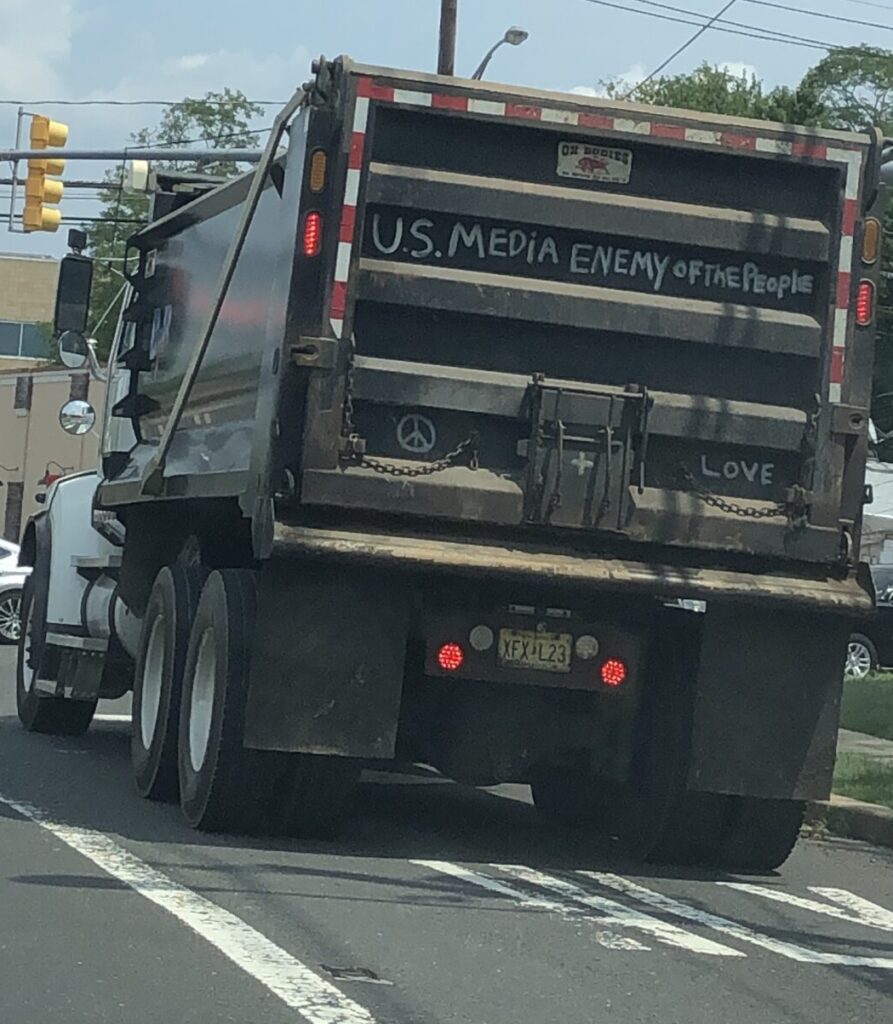
I posted this to my personal Instagram story yesterday and got mostly affirming comments. The coverage of COVID-19, the current president, and former president, have solidified my position that very few prominent journalists are in pursuit of the truth. Most media is heavily editorialized on the right and the left. Turn off the TV!