
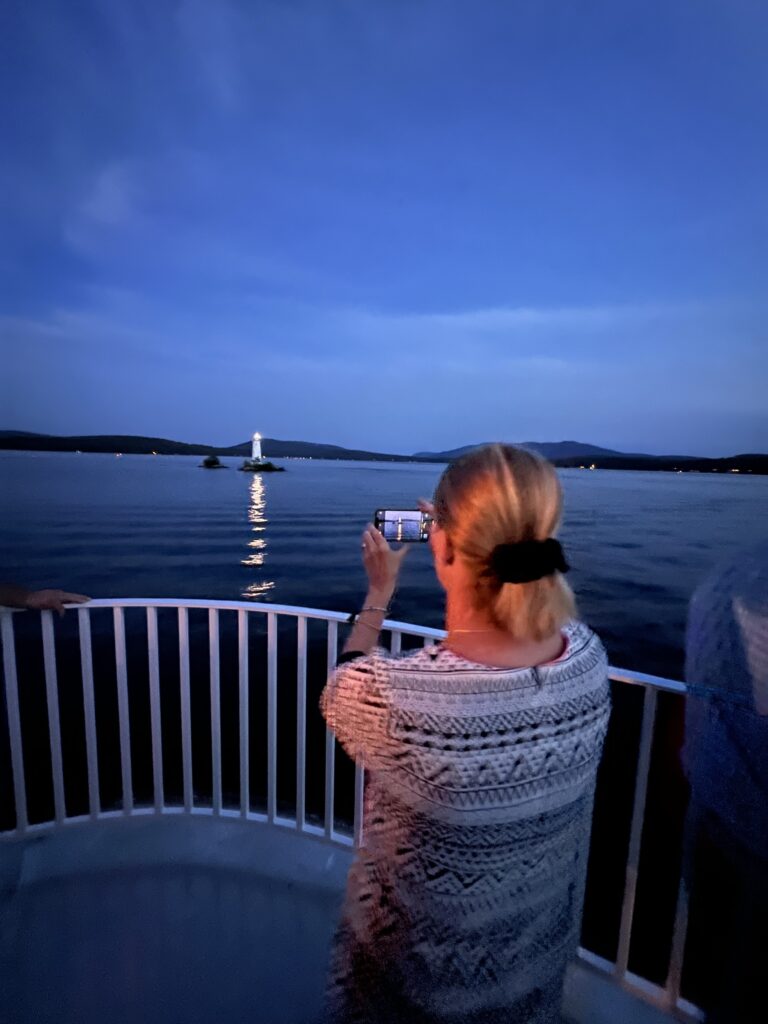
Another summer on the books
One of these days I’ll write more about my life and times in Europe. I’d like to think I have a unique perspective having lived and traveled extensively on both sides of the Atlantic.
Some Americans, especially on the left, love to praise everything European. Many right-wingers like to take the opposite stance. Regardless of which tribe you gravitate towards, from the perspective of an unabashed libertarian from New Hampshire, there are a number of categories where western European countries out perform in.
One of these areas is passenger transportation. I’d even go so far to say that Western Europe currently has a much more free market passenger transportation system than that of the United States. Nearly all long-distance highways in France, for example, are leased to private corporations and funded through direct user fees in the form of tolls. Guess what? There are no potholes. European railroads operate on a similar public/private premise.
More well-run options for consumers leads to more competition. Trains, cars, and planes all complement each other nicely. This comes in large juxtaposition to transportation in the United States, which is almost entirely and ineptly run by government agencies. There is little reason reason why 2 to 5-hour car trips in the Northeast could be supplemented with private train travel, even New Hampshire. The population densities are very comparable in this part of the country to many areas in Europe. Sure, we have very car-dependent towns, but this could be easily fixed over time with better mixed-use development and libertarian-esque zoning laws, see Japan.
The United States once had the largest mass transportation system in the world. Nearly all of it was privately operated I might add. The US still has the largest freight railroad network in the world in terms of tonnage. Passenger train travel and freight train haulage peaked in 1917, however the rapid decline of the system did not occur until the late 1940s after the war. The decay was largely attributable to the subsidization of highway projects, which was a boon for truckers, and removal of streetcars, which spurred high demand for automobile ownership. General Motors was largely responsible for lobbying government officials to forcibly remove streetcars and thereby increase car sales.
To its credit, GM did play a large role in helping supply allied machinery during the war. Correspondingly, the attitude thereafter in Washington was: “What’s best for GM is best for the country”. Additionally, more locally, in New Hampshire, there was a lot of resentment by the 1940s by state politicians against the Boston & Maine Railroad, which had effectively held a tight grip over the New Hampshire legislature for over 75 years. Giving rein to the automobile was seen as a way to get rid of the old guard. It’s no coincidence that New Hampshire has the lowest density of rail traffic in the country (except for Hawaii, which effectively no longer has railroads). In fact, it’s by design. The state government wanted to monopolize control over transportation to sweep away the Boston and Maine Corporation. Even Vermont, which has half the population of New Hampshire and less than half the GDP, has considerably more rail activity.
From a purely physics perspective, railroads have profound efficiency advantages over auto roads in terms of theoretical long-term cost (depends who’s running it; ideally an entity with profit motive) effective throughput (freight and passenger volume), and energy use, especially if using nuclear power like what is done in France. It’s foolish to dismiss this fact. Every analysis written on this subject by Cato Institute and even Drew Cline of the Bartlett Institute clearly did not consult a physicist or at least willfully ignored the hard science.
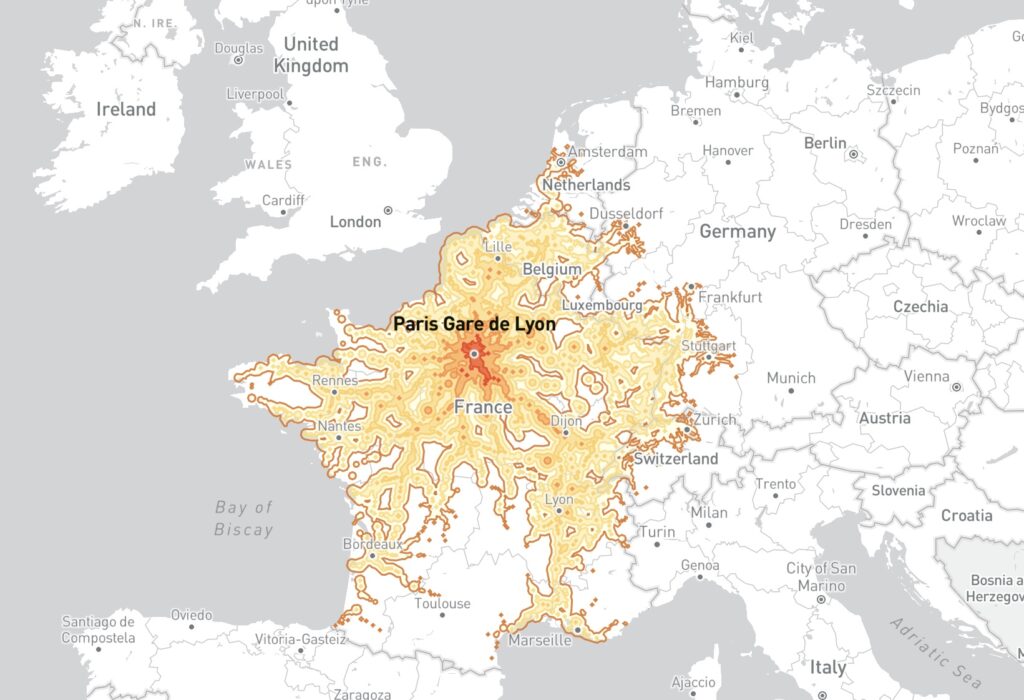
I digress. This post was inspired by this interactive visualization that shows on the map how far you can get in 5 hours by train in Europe. France is a very well-connected country due to the SNCF’s TGV. Germany’s DB isn’t quite as fast, however it is quite good, without requiring the same level of subsidies. In France, roughly half of a train ticket price is subsidized by its central government. I will end that French rail system (especially the high-speed rail system) is heavily subsidized at the opportunity cost of encouraging growth in other areas of society. France is no darling in the perspective of free market economists, however it is light years better in terms of transportation options than that of our current American system.
I would never recommend traveling to the interior of the British Isles in pursuit of exotic food nor beach weather. What I did find on my most recent trip to Britain was rich history, scenic landscapes, and great company. I initially had grand ambitions to do this post as more of a travelogue, but it’s been almost two months since the trip so I’ll stick to the highlights.
In June, I had the opportunity to visit friends who are currently living in York, England, and I knew this couple from my life and times in beautiful central New Jersey. I flew both in and out of Edinburgh, Scotland, directly from Boston, which was a surprise because I thought I was going to have to fly into Heathrow. During my 7 days in the UK, I made several stops on my train tour, which I will elaborate on.
This was my first time leaving the US since covid, and it was mildly interesting to see what the post-apocalypse world looked like, or rather didn’t look like, away from home mostly because it seemed like things had reset back to normal much more quickly than in metropolitan US. Not a soul wore a mask outside the airport. Only place I saw masks was by a queue of people getting on an AirCanada flight, ha! I did not have to wear a mask on my flight, and my only requirement was to have a negative covid test to get back on the return flight. The negative test requirement ended up being dropped the day after my return flight.
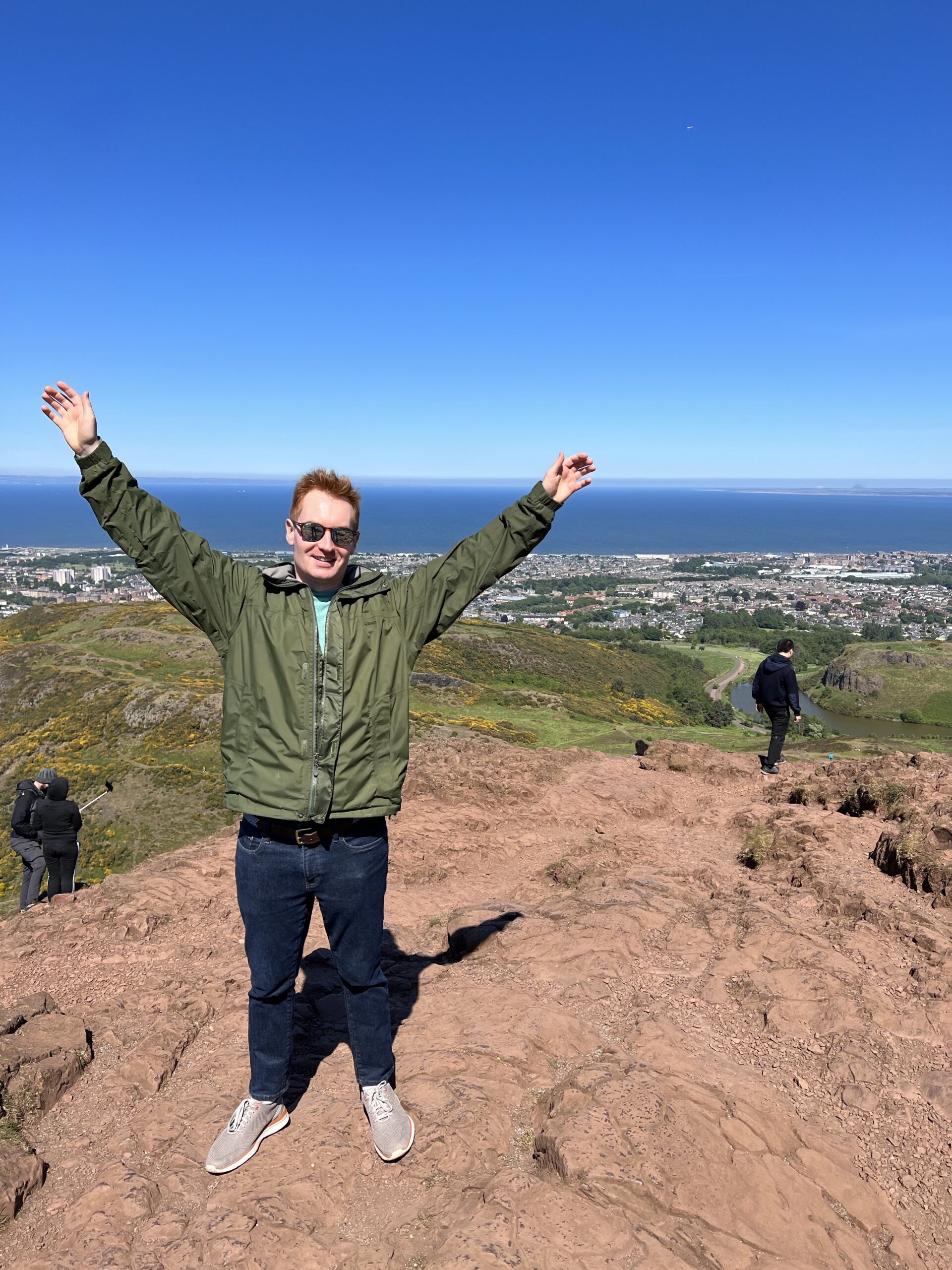
Best thing: Hike up Arthur’s Seat. The weather the first day was incredible, with blue skies and no clouds, which is rare in Northwest Europe. From the top of this ancient volcano, located directly in the city center, you could see the entire Edinburgh region, the ocean, and the large cantilever bridge that crosses the Firth of Forth. Open, green, treeless fields and hills as far as the eye could see.
Other highlights: Holyrood Palace, the castle, and overall architecture. I ate haggis, which despite the reputation among Americans, tasted reasonably good.
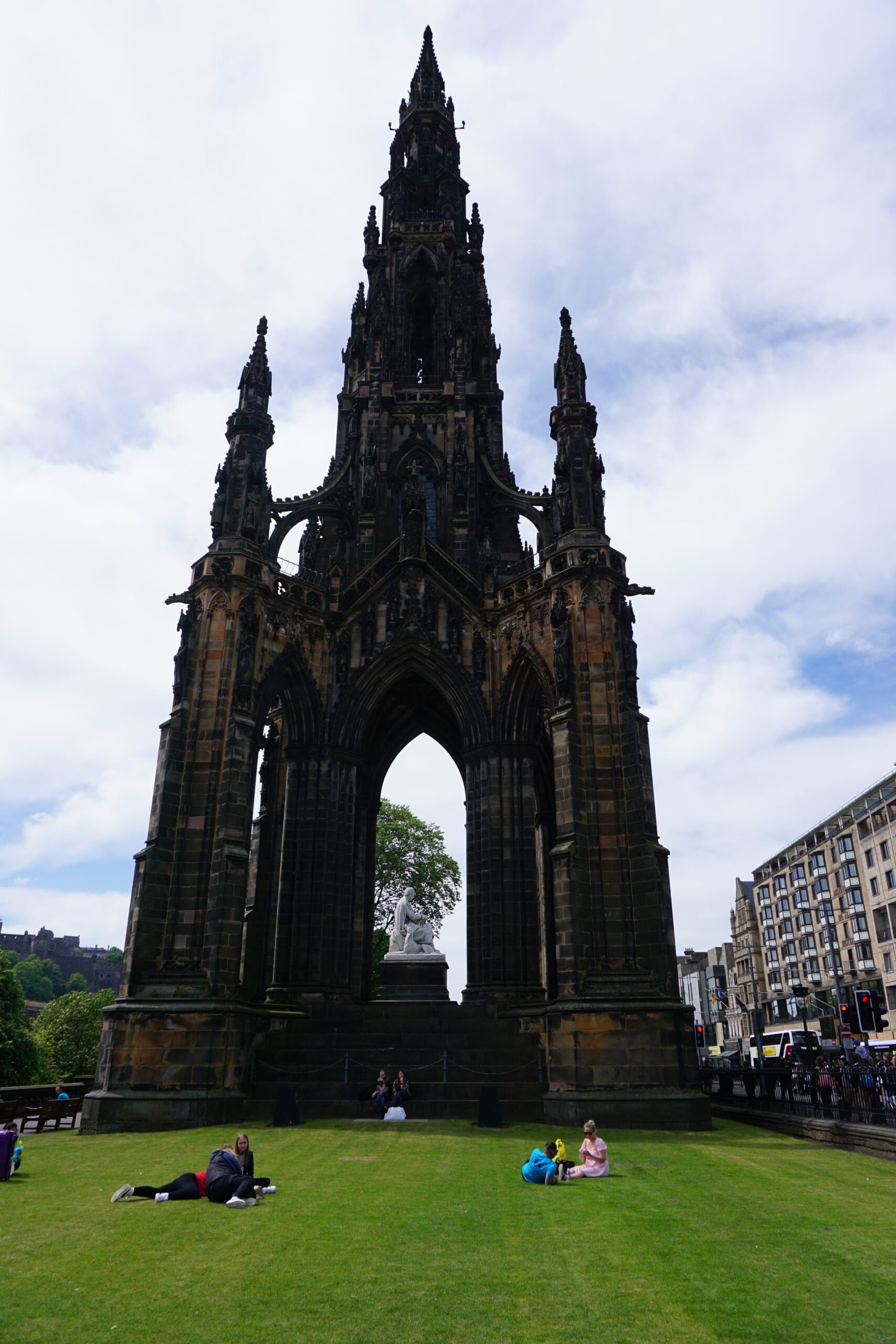
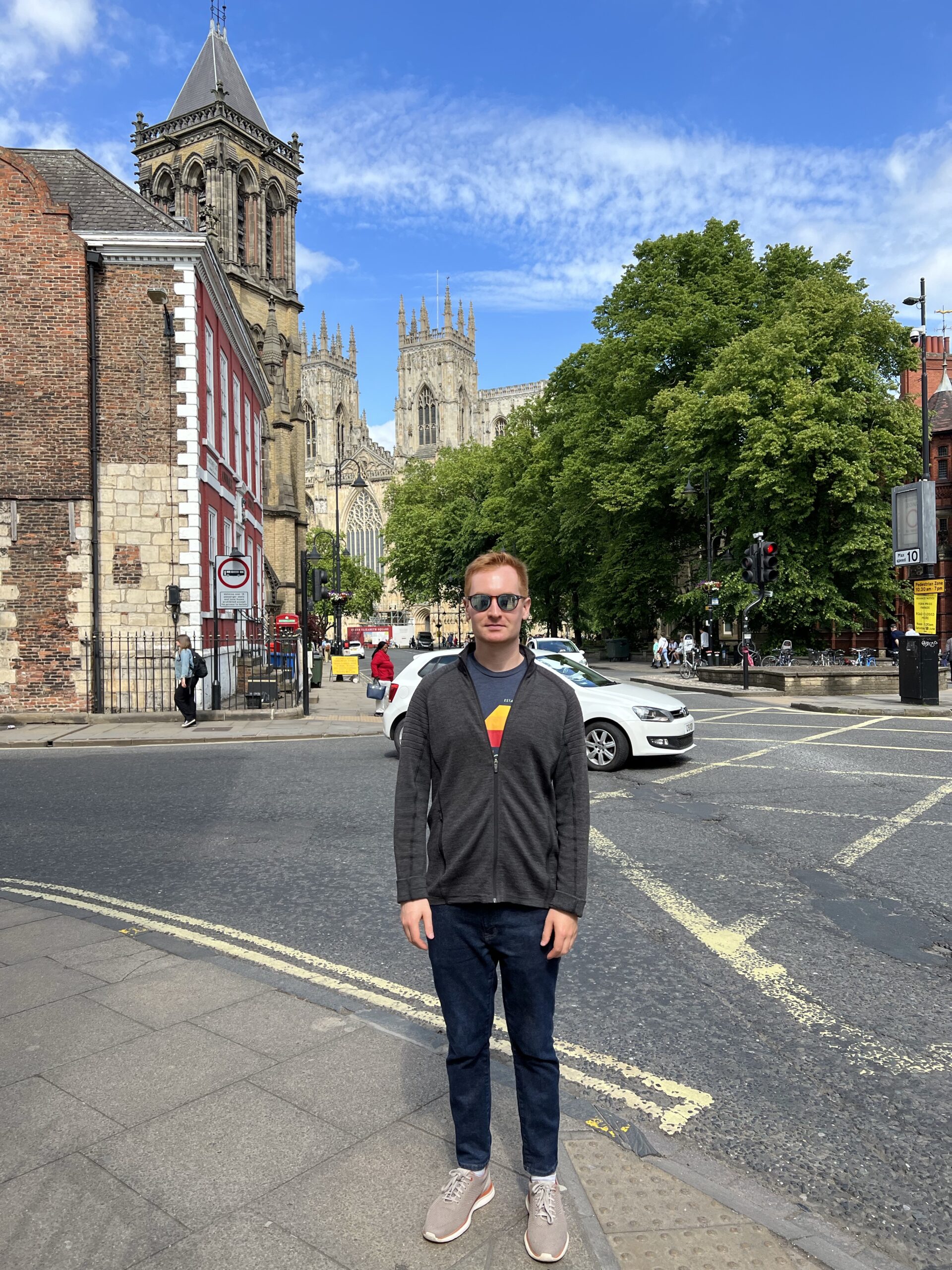
Best thing: Museum Gardens and site seeing near the Minster.
Honorable mention: Gatehouse Coffee. Really cool cafe built right into the city entrance gate. York was a walled city first settled in Roman times. Not a big city in terms of population, but it’s famous among Brits for the history.
What I didn’t get to see: The National Railway Museum. It was closed on Mondays, which ended up being the only day that would have worked. I have a knack for going to famous cities and missing out on great railroad museums. I’m looking at you Lucerne Switzerland. My friends thought I was kidding that I wanted to go to the railroad museum. Trains are a priority people!
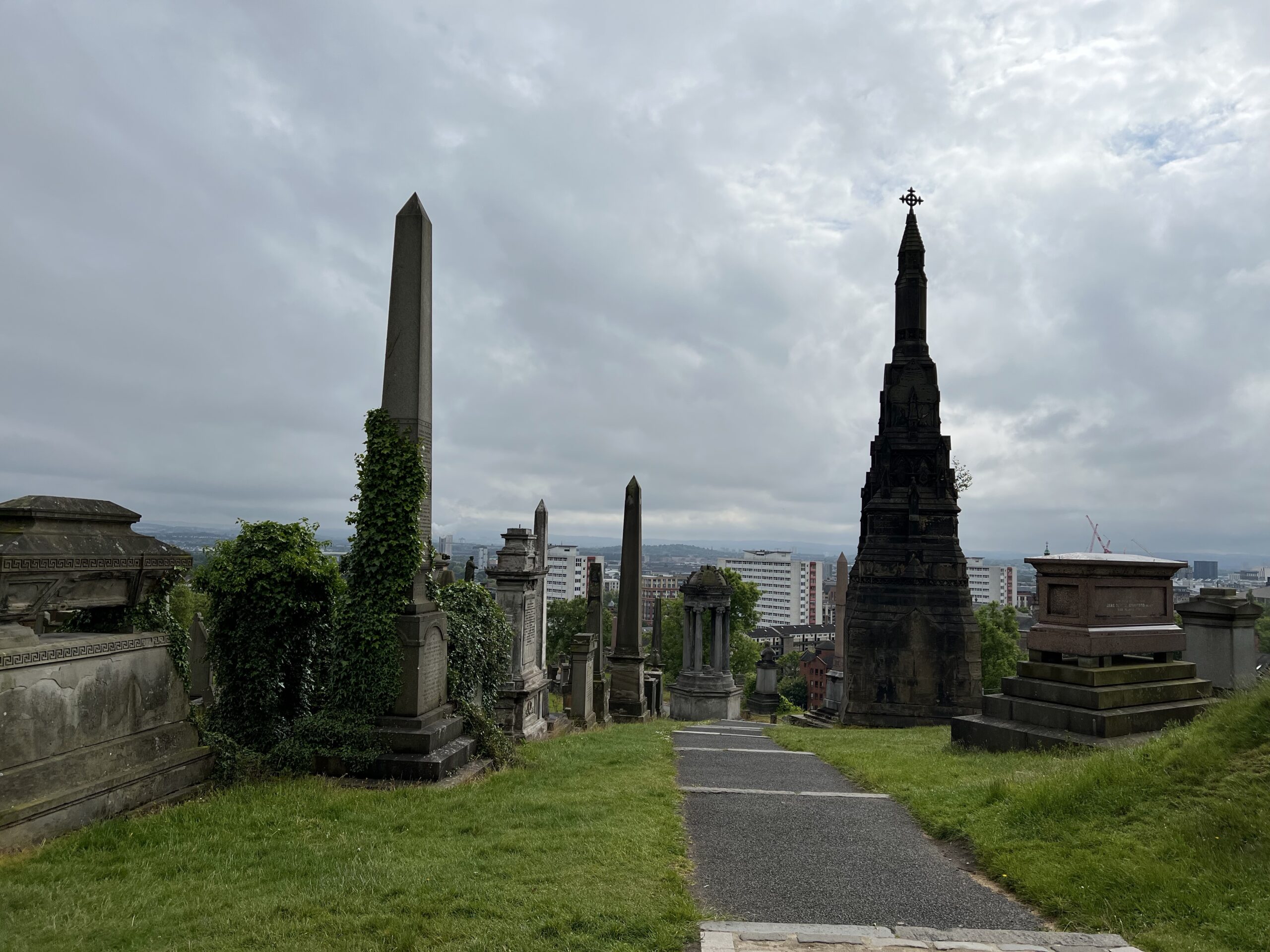
Best thing: Necropolis. I’ll admit I was shaking my head at first that my friends were taking me to a graveyard, but the view and the hilltop landscape with tomb stones in the foreground make it clear this is not your average graveyard.
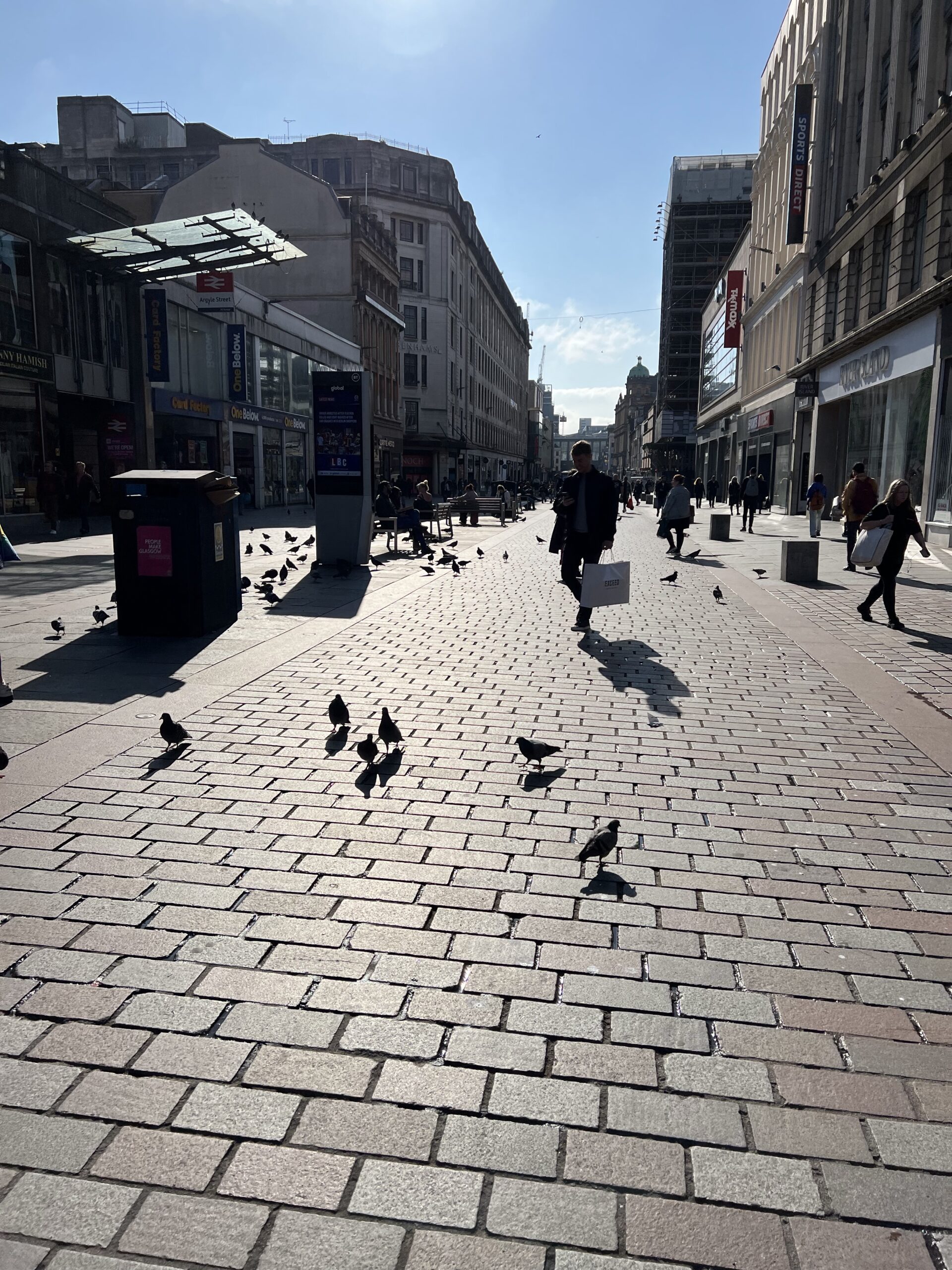
Honorable mention: The food. I also tried a pornstar martini for the first time. Glasgow was surprisingly cosmopolitan, significantly more so than Edinburgh. Glasgow is the 4th largest city in the UK. Did not know. It’s slightly larger than Edinburgh. However, Edinburgh does get more props for interesting architecture and history.
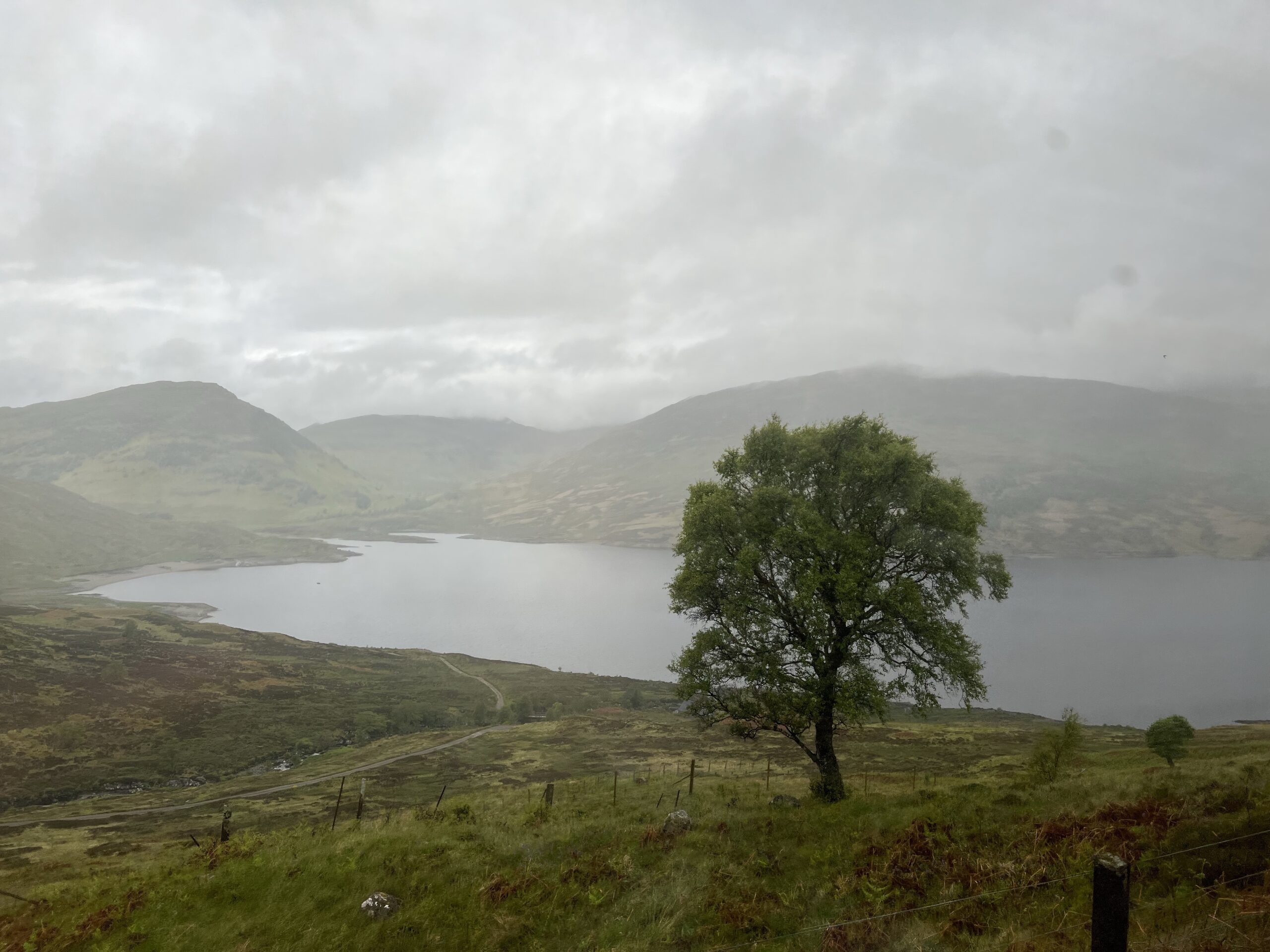
Best thing: The train ride between Fort William and Glasgow. The landscape of the Highlands is wild to put it lightly. The rocky unobstructed views with very few trees had some semblance to that of the western US states, albeit much greener and cloudier. The train meandered into uninhabited valleys, save a few random hikers.
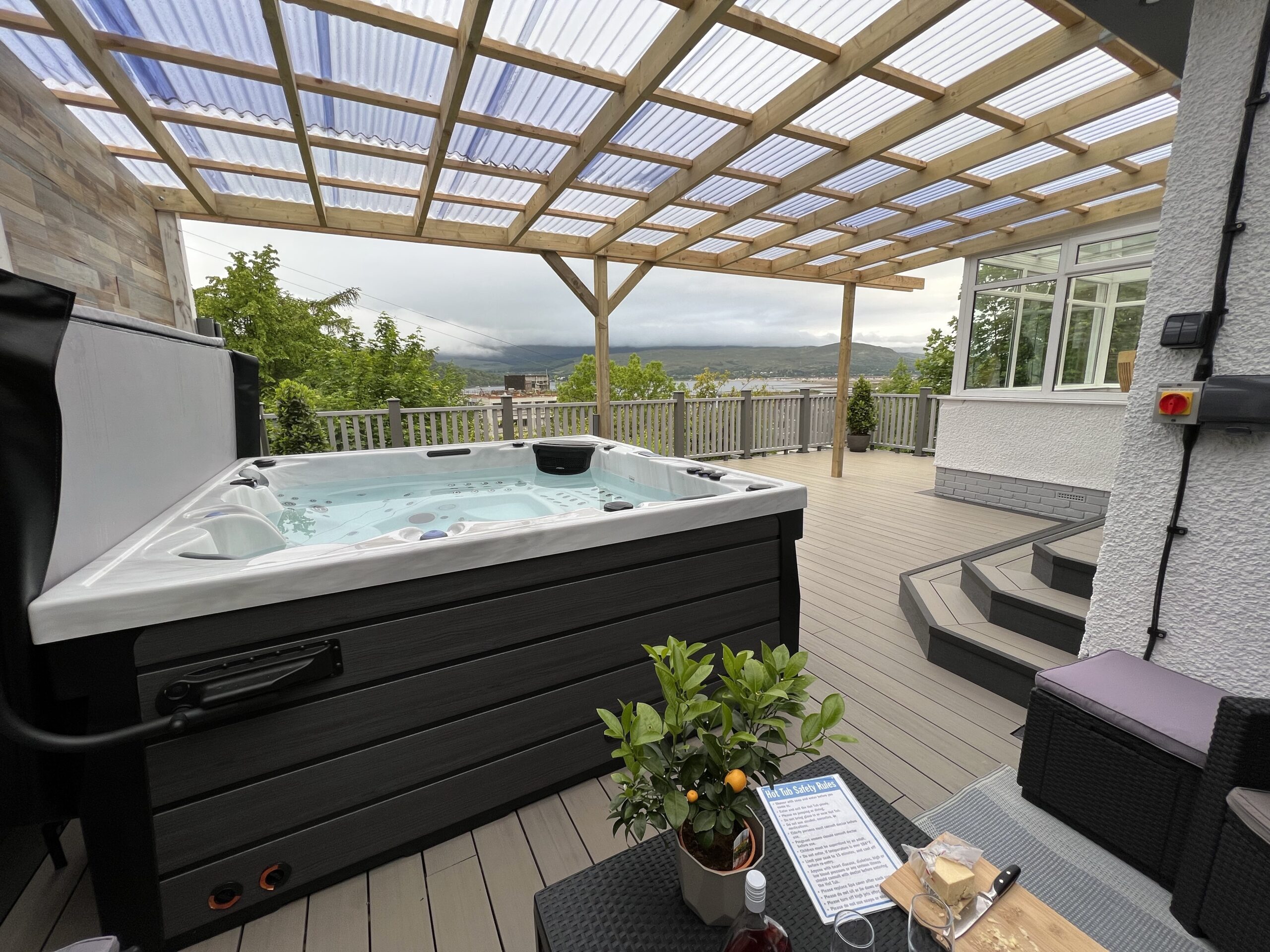
Honorable mention: Ben Nevis distillery and the hot tub on the deck of our Airbnb. We had a beautiful view of the town and loch below us. Would gladly stay there again. Ft William is a well known town among Brits, and I’m glad I went to more of a locals destination in the Highlands.
I was gunning for a longer train journey to Mallaig, but 3 hours was long of enough for the rest of the crew this time. There is a famous viaduct used in the Harry Potter films just northwest of Ft William had we continued further on the train. In the future, if I go back to this area, I would also like to see the Isle of Skye.
Overall, great trip. Exceeded expectations. If you were to have asked me two years ago what my first post-covid overseas trip would be, I probably would have predicted Norway or Iceland, but the timing was right to visit friends. I came away from with this trip with a much better appreciation for Britain, despite it still not being a culinary destination. My previous trips to the British Isles included Jersey and London, and were very rushed. I had more energy in my college days. This time around was relaxed and I could watch the scenery go by as we lounged on the train.
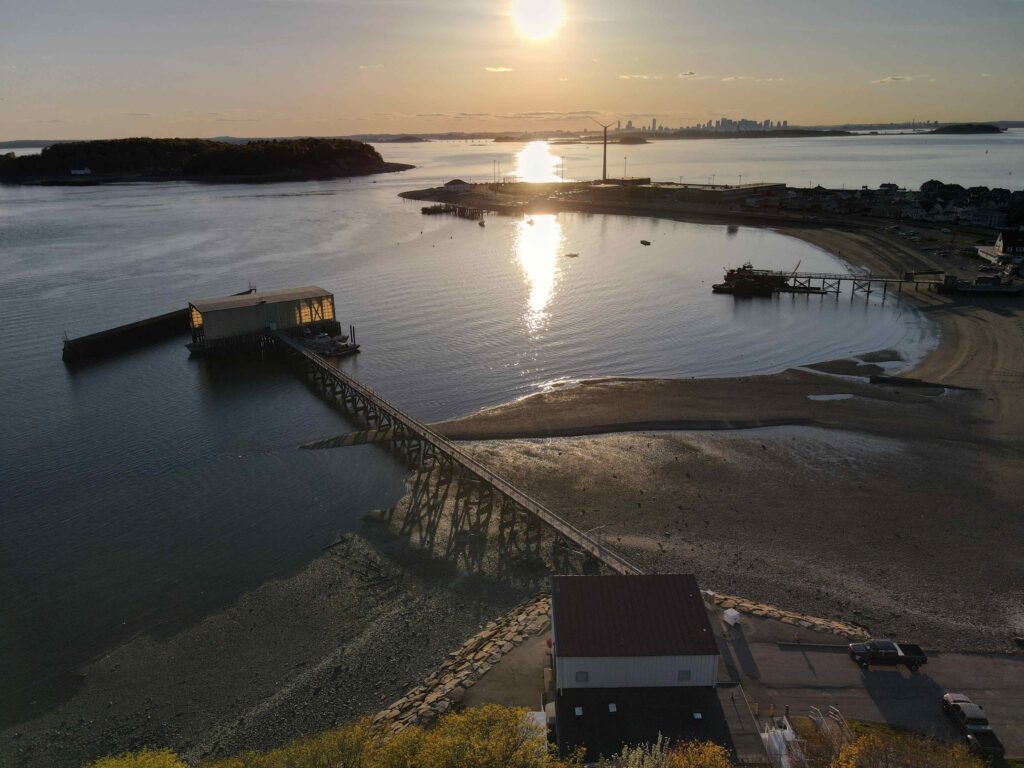
I bought the drewsview.xyz domain a year ago and the out reach of this page has exceeded my expectations. My Twitter page has grown at reasonable clip thanks in no small part to my #NHpolitics and liberty followers. My public Instagram and YouTube pages need more love, but they have generated positive impressions. I’d like to be more active on Odysee, which is a video site hosted on a blockchain, and is more impervious to censorship. I plan on flying high and keeping the adventure going into Summer 2022. I have some good trips in the works for June. Stay hungry.
I had the pleasure of attending Liberty Forum a month ago for the first time. The annual event brings in speakers and liberty activists from across the country together in one roof. It’s also an impressive networking event for the liberty community. While spending my entire childhood in New Hampshire, I have loosely followed the big ambitions of the Free State Project, the organization which sponsors Liberty Forum.
I got a lot out of this event, but the most significant feature was the ability to interact with some of the most well-known and effective activists in New Hampshire politics. The event sponsored many dinner events, which were organized around a subject or a certain activist. On Friday evening of Liberty Forum, I had the pleasure of meeting Carla Gericke and her husband Louis Calitz. Both of them are from South Africa and have a remarkable immigration story, which Carla writes about extensively in her anthology of short stories “The Ecstatic Pessimist”. And no, Carla didn’t pay me to write that, but it’s a good book that I did read.
I’ve seen Carla’s name pop up in the news for many years and have more recently become acquainted with her online personality in social media and on the Free State Live podcast, which is live every Monday night at 8pm. Carla is a hoot, and she is every bit the same in real life as she is on TV. She had stories about clashing interactions with Governor Sununu and with some of the crazies in politics. She and Louis have a lot of fun helping liberate the Free State and I really enjoyed hearing their stories in person. I found it much easier to meet people and mingle in the small dinner settings. So right off the bat, A+ to Liberty Forum for these dinners.
The next evening, I went to the Crypto dinner and met even more young people around my age. And as somewhat of an aside, I think other than the fact that the FSP has been extraordinarily effective, something that royally frosts (bhahaha, that’s a pun because it’s also the political commissar of Dover’s last name) the progressives in New Hampshire politics is the fact that most of the Free Staters are young and will be around for years. They are just getting started. The rest of the political leadership in NH is a herd of fat-fingered dinosaurs.
I met some genuinely amazing people at the crypto dinner and they subsequently invited me back to the Quill, the liberty clubhouse in Manchester, which is place for people who believe in liberty to socialize. If your state doesn’t have liberty clubhouses, it’s doing it all wrong. Prior to observing the NH liberty community in first person, I wouldn’t say this, but there are many bonafide parallels to the FSP and the Zion movement of Utah and more recently that of Israel. Not only is the FSP bringing people to NH, but it is building a robust and decentralized community. Statists are on notice.
There is a big emphasis on agorism within the FSP community and a number of vendors had booths set up in the main room. Coffee, Liber-Tea, spices, goldbacks, realtors, you name it. Another interesting project I later learned about is the Independence Inn in Strafford, NH, where a group of Free Staters are restoring an old inn to be used to help prospective movers discover the state and also rejuvenate the local tavern. There are multiple housing projects, including one to build a large Free State apartment building. The Free Staters have established multiple interwoven networks that help ease housing and job searches so that basically if you want to move to NH in pursuit of liberty there should be no excuses.
Of course there were speakers at Liberty Forum as well, which, other than the networking, was the center piece of the event. Some of the highlights were Vermin Supreme’s lawyer, 3D printing activist Cody Wilson, and NH Education Commissioner Frank Edelblut. Martin Kulldorff, who co-wrote the Great Barrington Declaration, was an honorable guest.
The event finished with the State of the Free State address by Jeremy Kauffman, who mentioned some of the outstanding achievements of the FSP in the past year both inside and out of the government. There was high moral in the room for the future of liberty in the Free State. As a New Hampshire native, I don’t say this lightly, but this could be a turning point for a new era in New Hampshire.
Most of the world uses paper called A4, which is slightly narrower and longer than US/Canadian letter paper. The A-series paper has a neat property, because of its dimensions, that if you fold it in half, it will still have the same aspect ratio. So A5 is half of A4, which is half of A3 and so forth. A0 is one square meter in area.
This video I found makes my inner physicist chuckle because it shows the scale of the universe relative to A4 paper. Reminds me of Formi questions for Science Olympiad. It also reminds me of an often cited book in computer science called “A pattern language”, written by an architect named Christopher Alexander, which explores how everything in the universe is repeated patterns that scale.
Excellent travel guide and drone scenery produced by Tampa Aerial Media in 2020. I’ll forgive them, since the drone scenes are excellent, but I want to note a couple corrections. US Rte 3 continues to the Québec border crossing in Pittsburg, NH —NOT Maine. The Memorial Bridge in Portsmouth, NH, rebuilt in 2013, is not the original bridge, which was built in 1923.
Ever since I found out over a year ago that drones have been forbidden from New Hampshire state parks, I’ve made it a personal mission to find a way to get drones reinstated. If I can fly a drone in Tuckerman’s Ravine or any town park in New Hampshire, without a permit, why should I be forbidden from flying at Franconia Notch State Park? This is the argument I made before the state legislature in my visit to Concord two Wednesdays ago.
I had been corresponding with one of my state representatives, Keith Ammon of New Boston, for over 6 months on this issue. Keith did some initial investigation at my request and was constantly treated with radio silence by officials in the state parks division. I kept pushing and encouraged Keith to submit a bill mid-September 2021. The resulting legislative service request became House Bill 1292 (2022).
In October, I began rallying support from other drone users throughout the state primarily through Facebook groups, namely NH Drone Enthusiasts. Thru this networking, I had a lot of support from Marie Sapienza, who is a lawyer, former state representative, and drone photographer from Newton, NH. Her work is fantastic and she frequently posts on her Facebook page. I also had a lot of support from Forrest from Alpine Digital Media in Lincoln, NH.
Then came January. Time for the hearing for HB 1292. Most people involved with New Hampshire politics would argue that having an over-400-member legislature is a profound feature, not a flaw, of New Hampshire’s government. As a direct result, in non-covid times, nearly all bills get public hearings, which is not true of most government bodies in the United States. Another benefit of the large size of the legislature is the ability to access politicians. Most politicians in New Hampshire will respond to genuine emails, which is how I even got to this point with the bill.
Enter stage right. Capital cities usually attempt to be a showpiece for the political entity they represent. Concord, New Hampshire, is no exception. The elegant granite government buildings embody the rugged and self-reliant nature of New Hampshire’s frontier yankee culture, which persists despite being rather cosmopolitan. As an aside, I will point out that there are state capitals that need to up their game. Trenton, New Jersey, I’m looking at you. As they say, “The world makes and Trenton takes.” Albany, New York, isn’t really anything to call home about either, nor is Hartford, Connecticut.
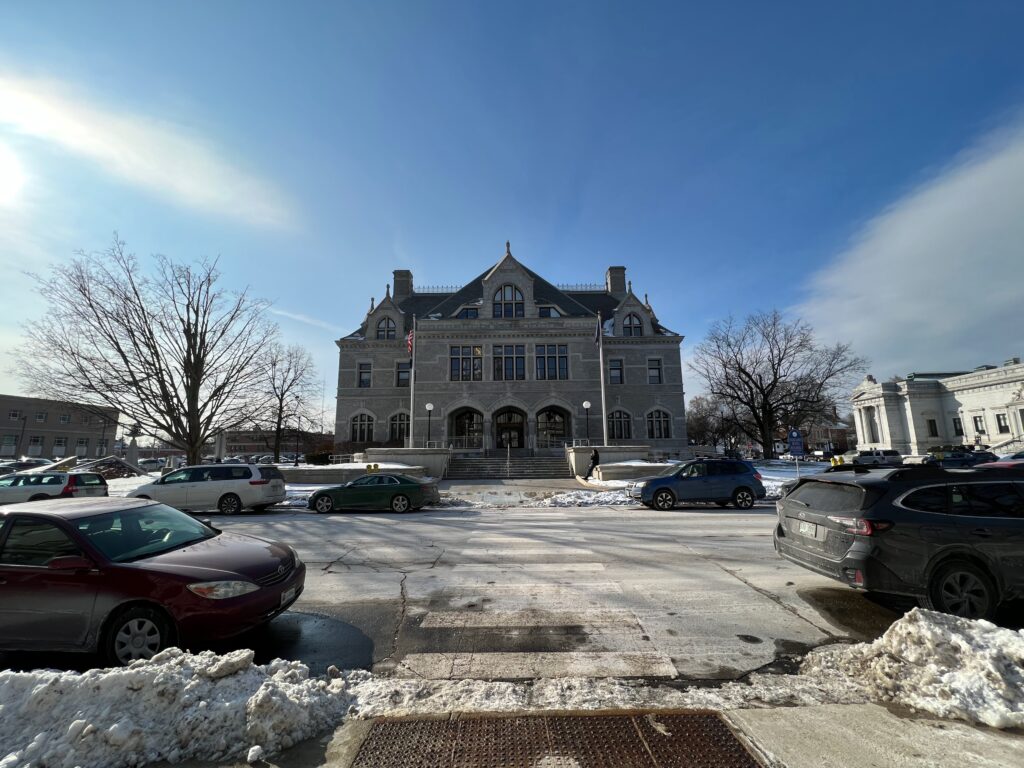
Center stage. All of the House committee hearings are held in the New Hampshire Legislative Office Building (LOB), located directly behind the New Hampshire State House. The LOB is a former federal courthouse and post office that was converted into state offices in the 1960s. Again, it’s one of the shining examples of New Hampshire granite architecture in Concord.
I walked into into the LOB and a security guard directed me up the stairs to the 3rd floor. I shuffled into the committee room during a hearing for some environmental bill that wasn’t very well attended. An elderly man wearing a mask dressed in flannel, who had just testified, glared grumpily at me as he proceeded back to his seat. I was wearing a business suit and an Old Man of the Mountain tie. How apropos?
The committee called Rep. Ammon to the stand, where he introduced the bill and alluded that I would be testifying. Within a couple minutes of Rep. Ammon’s testimony, the committee chair called the “expert”—me—to the stand. I gave my short speech and brought up many of the facts uncovered in me and Marie’s research.
Then came the questions. One of the most particular questions was in regards to privacy. What if people in state parks are captured in the drone footage they asked. I swiftly made the argument that people with iPhones have the right to film anywhere in public and people’s faces are much more in view from a close encounter with an iPhone rather than a drone far away in the sky.
Next up to the plate were the various administrators, all of whom testifying against the bill. Ha! None of them could really come up with compelling arguments against drones on public land. Drones are considerably quieter and safer than hunting or motor vehicles. Phil Bryce, the NH Parks and Recreation director, droned on and on with department mission statements. His testimony was taken right off the streets of Anatevka. “Tradition!” Phil kept saying. The famous song from “Fiddler on the Roof” came to mind. Drones apparently are not part of New Hampshire tradition and hunting is according to him. Never mind the fact that New Hampshire has a long tradition of embracing aerospace technology. In greater Nashua alone, Sanders Associates, and its many spinoffs, and Daniel Webster College were significant institutions in aerospace, and have long since had a profound impact on the modern economy of New Hampshire. The first American astronaut, Alan Shepard, was also a New Hampshire native.
I spoke with several representatives after the session and I do come away with some hope there will be a law or rules that will be more amenable to flying drones while also getting rid of the outright ban.
While it’s likely true that many government organizations operate in quasi-secrecy, I give the New Hampshire General Court a lot of credit for spending many hours holding these public hearings to at least listen to constituents. Anyone can go speak at these events. The doors are wide open.
Another observation was the attitude of a few of the reps. I noticed one rep in the minority party basically had his back turned the whole time to the speakers at the podium. I thought it was pretty disrespectful. If his ridiculous mask were any indication, he’s probably a pretty weird dude.
Overall a decent day in Concord. I encourage more people to testify at these hearings. If only we could harness just a fraction people’s energy that goes into posting scornful content on social media towards being active participants in government, the world would be a far better place. I believe the success of the New Hampshire model is attributable to both the politically active culture of New Hampshire and the structure of its government, and thus should be put on a pedestal as a shining example for the rest of the world to see.
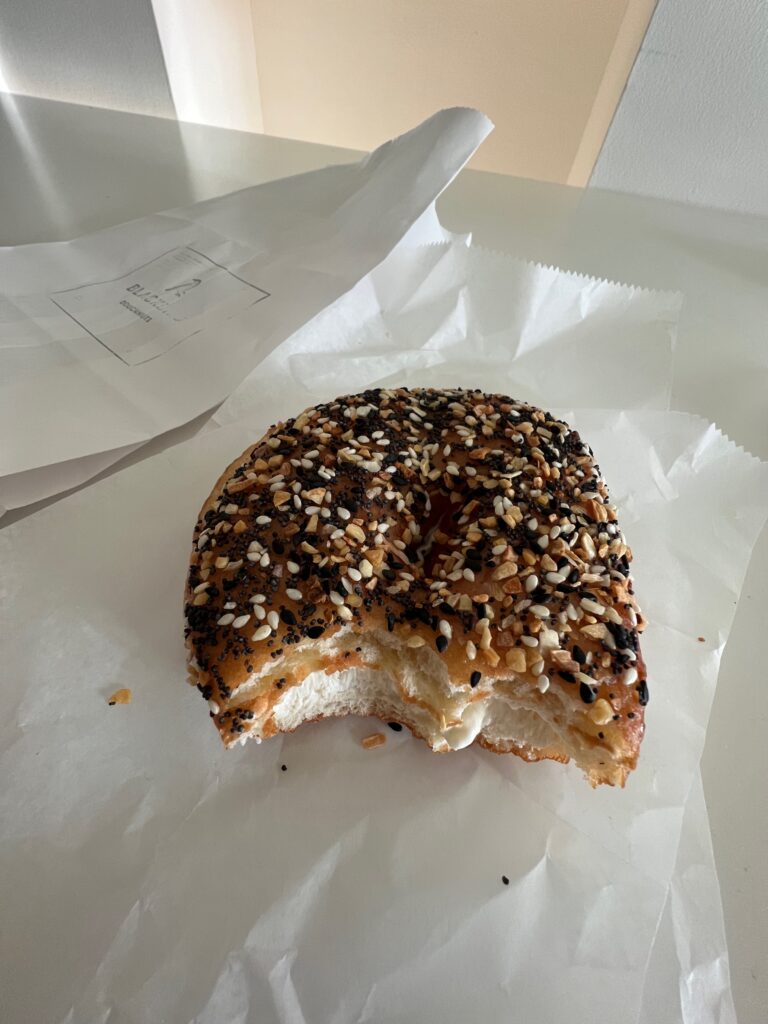
I’m not a big doughnut guy, which is probably why I like this everything bagel doughnut so much. It’s not sweet at all and the filling is cream cheese. This is from Blackbird Doughnuts in Boston.